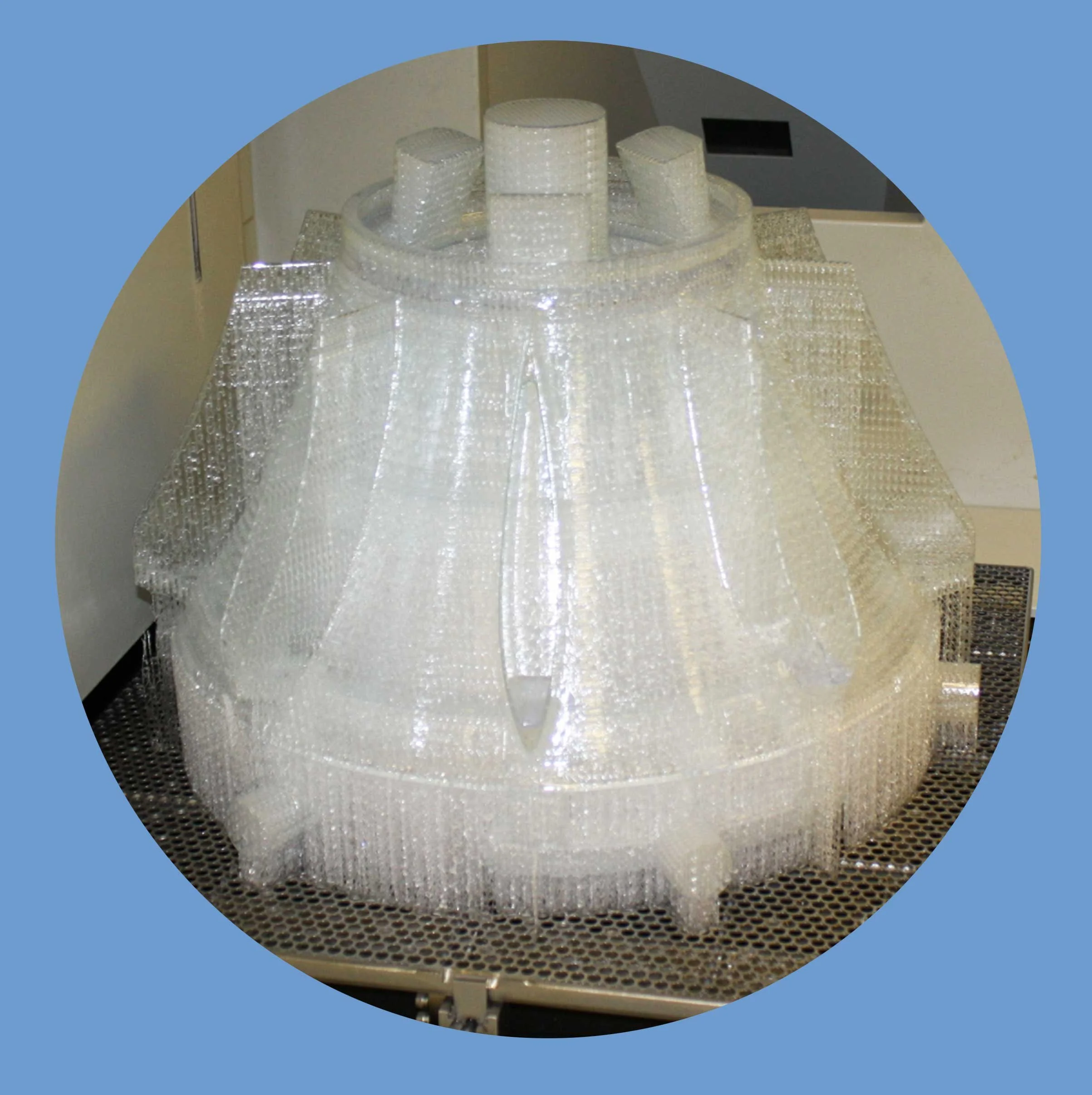
ADVANTAGES OF FOAM PATTERNS
Thin wall sections are possible, even with large castings
Dimensional Accuracy across thin and thick sections
Lighter Weight than wax
Lower Cost and Faster than 3D-printed patterns
Chills are not required for thick sections
Shell cracking has been virtually eliminated
Ceramic Cores can be accommodated
Existing wax tooling can be used in most cases
Mold Design and Tool Building Services are available
Dimensional Accuracy and Stability …
The material maintains consistent dimensional accuracy across mixed‑section geometry, eliminating the distortion typically seen in wax. The patterns are made from thermoset polyurethane, resistant to heat and humidity, so there is no need to store them in controlled environments.
Excellent Surface Finish …
Our patterns deliver a smooth, uniform surface that translates directly into high-quality ceramic shells and metal castings. This reduces downstream finishing time and improves overall part aesthetics and performance.
Lighter Weight than Wax …
The reduced density makes handling, assembly, and transportation easier and safer for foundry personnel. Our patterns have a density of approx. 16 lbs./cu.ft. vs. 62-65 for wax, so ~1/4 the weight. This reduces stress on the shell and requires less structural reinforcement of the trees.
Lower cost and Faster to produce than 3D‑printed patterns …
Compared to printed patterns, this solution offers a significantly lower cost per pattern. So, depending on quantity and timing requirements, tooling costs are easier to justify because the process eliminates the need for expensive 3D‑printing equipment.
Chills are not required …
Wax patterns having cross-sections greater than 10mm typically require chills. With our system, cross-sections of 150 – 200mm are possible with virtually no “sinks” or dimensional distortion, so no chills are required. Realizing the same is true for 3D-printed patterns, this is an issue for wax patterns, requiring additional tooling to produce the chills, and design and labor costs to accommodate them. This capability is also an advantage for producing large, complicated gating and riser designs.
Shell cracking is virtually eliminated …
The material’s low thermal expansion and controlled burnout characteristics dramatically reduce shell stress. Foundries experience fewer scrap events and more predictable casting outcomes.
Less costly injection equipment …
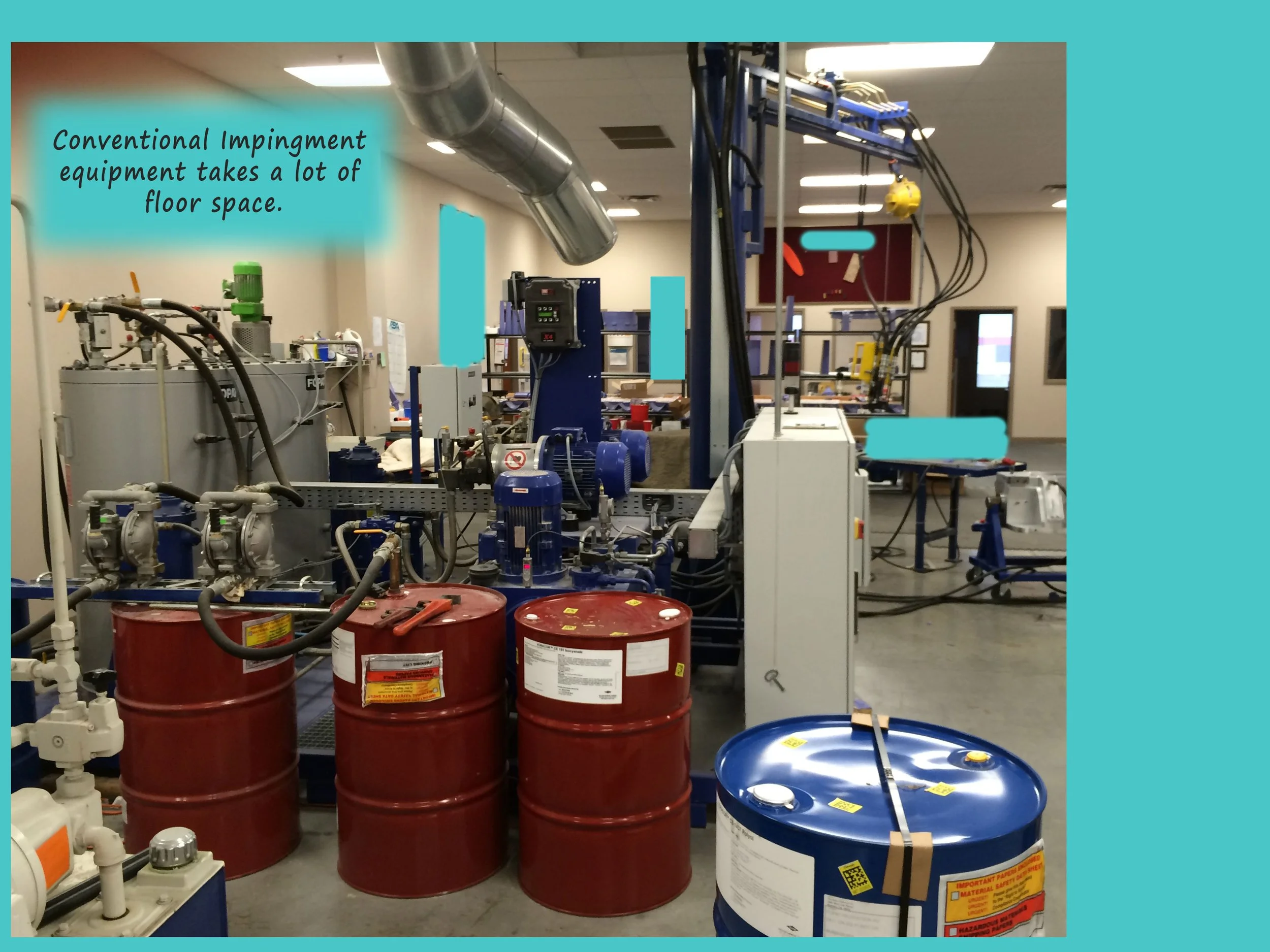
Depending on the pattern size, annual quantity requirements, and so forth, injection and support equipment needs will vary. But a general estimate is that our equipment is about half the cost of comparable wax presses or 3D printing machines, reducing capital expenditures.
Robust Tree Assembly …
ZyraFoam™ patterns can be processed exactly like printed patterns. The material bonds securely during assembly, creating rigid, stable trees that withstand handling and shelling. Where possible, we recommend molds for the entire tree and gating system so tree assembly can be speedy and consistent.
Ceramic Cores can be accommodated without issue …
Because the foam expansion pressure inside the mold is essentially equal in all directions, ceramic cores will not encounter the stresses they are subject to with wax injection, minimizing core breakage and less scrap.
Existing wax tooling can be used in most cases …
Most existing wax dies can be used with minimal adaptation, accelerating implementation. This protects prior tooling investments and shortens the transition timeline.
Mold Design and Tool Building Services are available …
Complete mold design and tooling services are offered to support both new programs and conversions from wax or printed patterns. This provides a turnkey path from concept to production‑ready tooling. Based on your CAD file and gating preferences, we can quote:
· Designing the Mold
· Building the Mold
· Producing Patterns
· or Connect you with a Pattern Service Bureau
· or Consult with your team to produce your patterns in-house
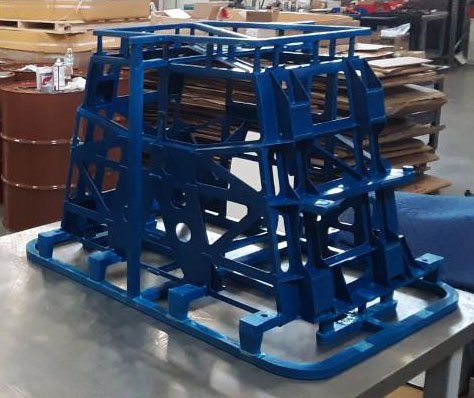
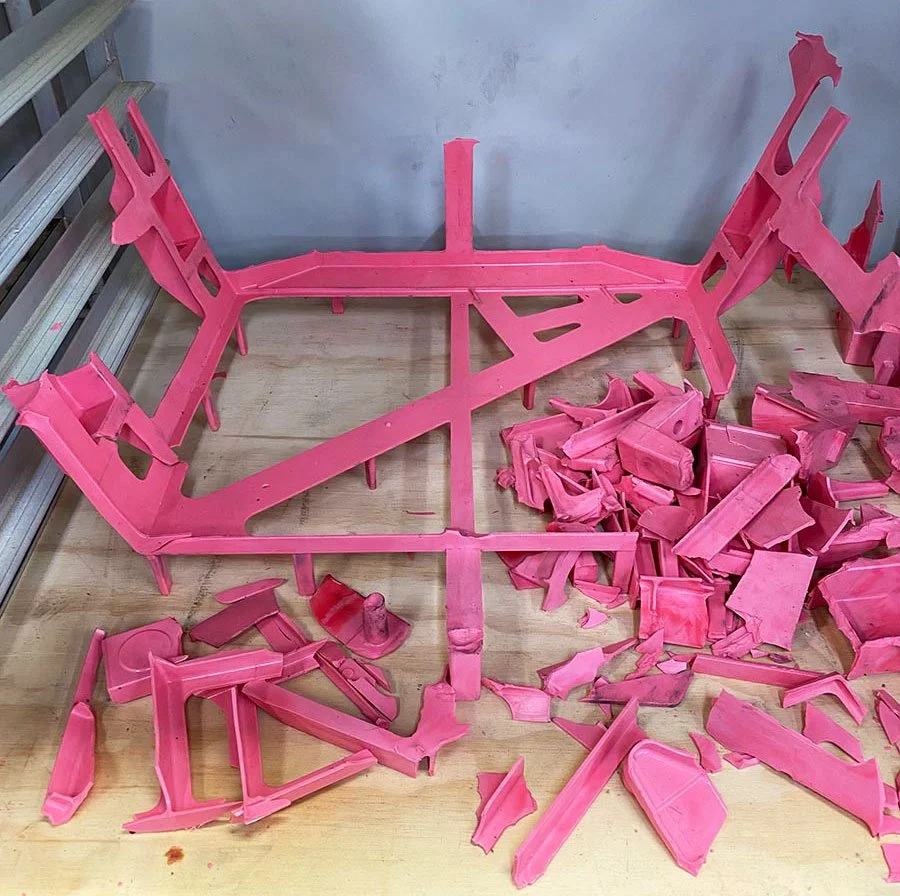
This pattern is 710 x 510 x 460 mm with 3mm wallstock. The geometry was thin and pattern wax froze off before the mold was full resulting in a fragile pattern that broke during demolding. Our rigid foam patterns did not have that issue.
Thin wall sections are not a problem …
Our digital injection system uses controlled hydraulic pressure to deliver the liquid urethane foam. As the material reacts, it expands by roughly a factor of five, generating substantial internal pressure. Together, these effects ensure consistent, fully packed results across every pattern — even for those with complex geometry or highly variable wall sections.